Timetable
– 8:30 a.m. to 9:00 a.m. – Reception
– 9.00-9.10 Presentation of the Seminar- Ignacio Bartesaghi (UCU Business School – Uruguay)
– 9:10 a.m. to 9:45 a.m. Situation of the MERCOSUR countries and their relation with Asian markets. Update of the agreements signed by the MERCOSUR and the current negotiation process – Juan Labraga (Director of the Commercial Policy Advice of the Ministry of Economy and Finances).
– 09:45 a.m.to 10:45 a.m. – New plurilateral agreements and the challenges for the CPTPP region | Comprehensive and Progressive Agreement for Trans-Pacific Partnership and extension to new partners: effects in the short and long term – Pedro Moncarz – (Universidad de Córdoba – Argentina), Sebastián Villano (UdelaR – Uruguay). RCEP | Regional Comprehensive Economic Partnership and the accession of new members – Ignacio Bartesaghi (UCU Business School – Uruguay).
– 10:45 a.m. to 11:00 a.m. Coffee
– 11:00 a.m. to 12:00 a.m. MERCOSUR and the Asian markets, Impact of an agreement between MERCOSUR and China – Renato Coelho Baumann (IPEA | Instituto de Investigación Económica Aplicada – Brasil). A gravitational and dynamic model to assess alternative free trade agreements for MERCOSUR: China, CPTPP | Comprehensive and Progressive Agreement for Trans-Pacific Partnership – UE. Flavia Rovira Pharos – CINVE | Centro de Investigaciones Económicas – Uruguay.
– 12:00 a.m. to -12:45 a.m. Round table. Moderated by: Marcel Vaillant (UdelaR, ACADECO | Academia Nacional de Economía | Uruguay) Isidoro Hodara (ACADECO | Academia Nacional de Economía | Uruguay) Marcos Soto (UCU Business School – Uruguay). Facundo Márquez (UEU | Unión de Exportadores del Uruguay). Huang Yazhong, Ambassador of China to Uruguay (China)
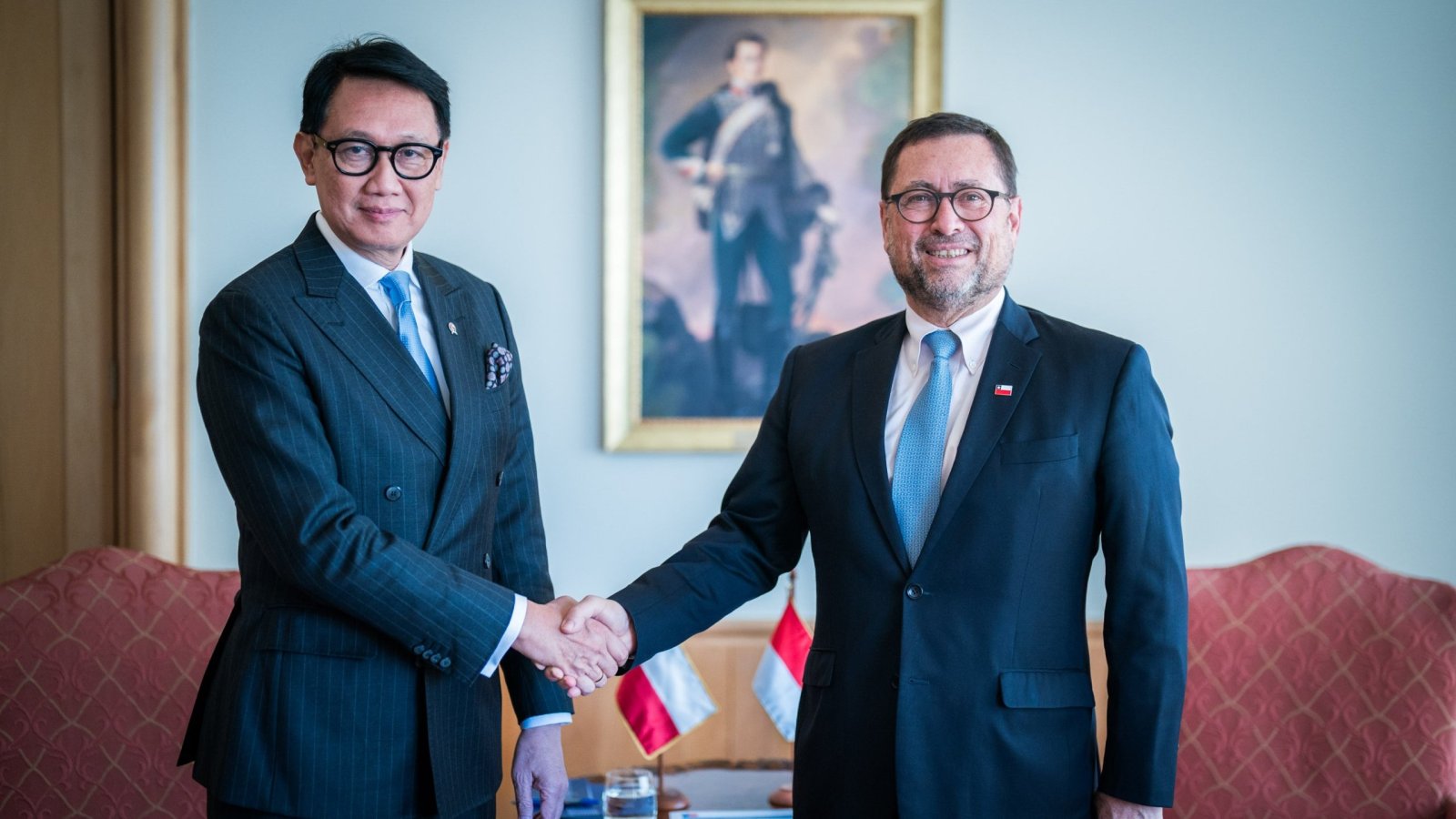
Chile and Indonesia met to strengthen their bilateral relationship.
Chile and Indonesia discussed on strengthening their bilateral relationship, Chile’s participation in the RCEP, and Valparaíso’s candidacy to host the Secretariat of the BBNJ Agreement.